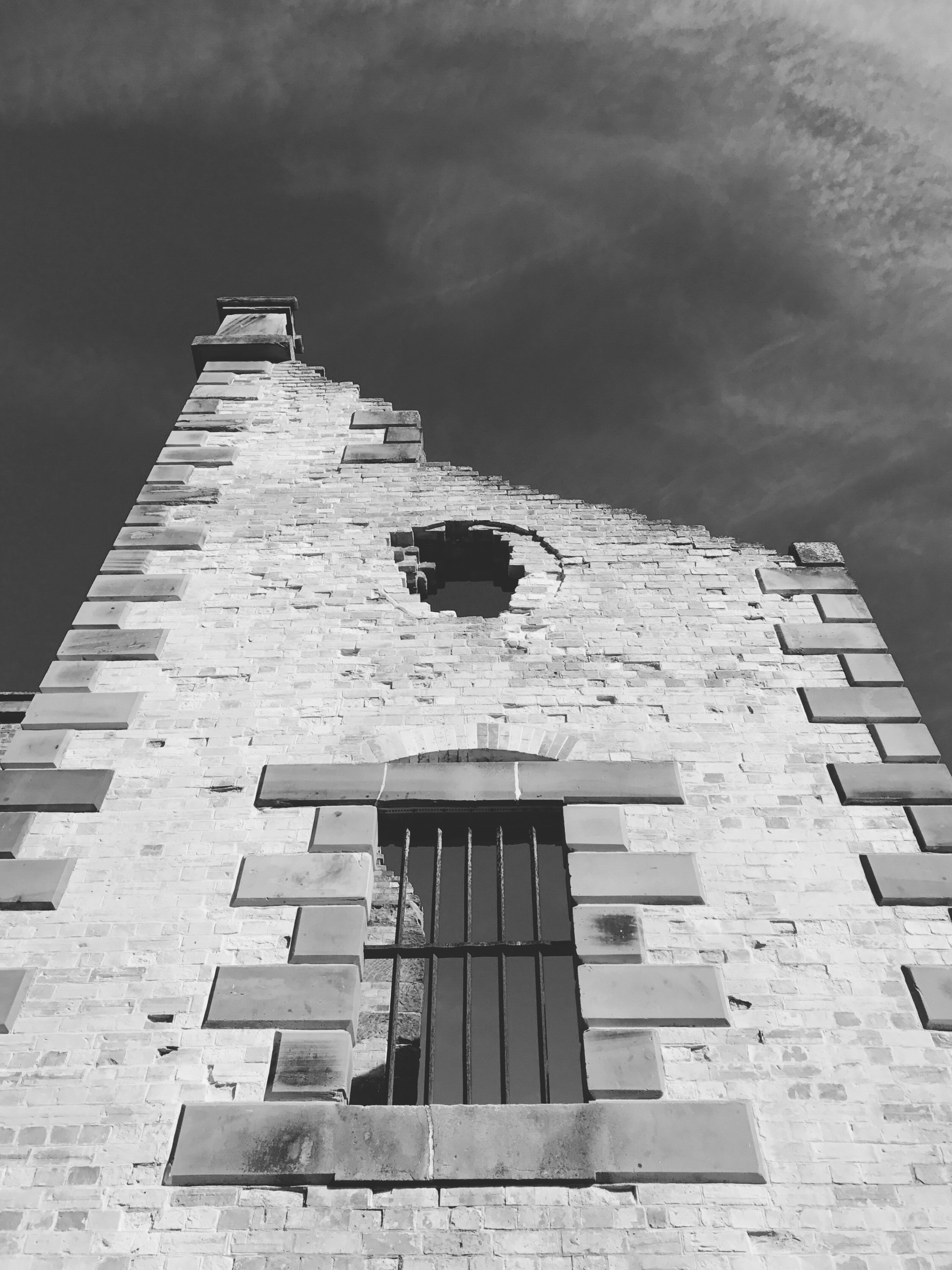
On the 10th of July, 2017 my family and I visited Port Arthur.
Port Arthur is famous for being the historic site of a penal colony established in the 1800s and is a popular tourist attraction in the state of Tasmania.
The site boasts well-preserved ruins of its historic architecture, and the buildings all have a rich and fascinating history that sheds light on the convict history of Australia.
All this was what we expected as we embarked on a trip to Port Arthur and began to wander the ruins.
What I did not expect was the sobering visit to the location of the Seperate Prison.
The Seperate Prison of Port Arthur can only be described a bleak and oppressive place.
It stands on a rise, large, white-walled and domineering as it looks over the port and lawns below.
The cloud of grey that descends as you enter cannot even be quietened by the juxtaposition of the invasive chatter of other tourists who have blatantly ignored the sign upon entry that encourages visitors to be silent and experience the place as the prisoners may have.
The Seperate Prison was built between the years of 1849 and 1850. Each man sent to Port Arthur under a criminal sentence was assigned time in the prison depending on the severity of their crime.
The prison was designed to be used in accordance to the ‘seperate system’, a relatively new prison system in its time. The theory behind the system was that solitary confinement was more effective in reforming criminals than that of corporal punishment — mandatory solitude would force captives to be introspective and repent of their crimes. Silence, isolation, work and religious instruction were forced upon the prisoners.
The cells held a single man, separated from the other inmates by a thick door and walls.
They were not permitted to speak. Twenty-three hours of the day were spent in total isolation. One hour was given for exercise that also occurred in seclusion. Upon exiting their cells for exercise or church, prisoners were required to wear a mask that covered their face.
Prison staff spoke to each other in sign language and wore cloth soled shoes to minimise any noise. Even the chapel was constructed in a way that prevented communication. Tiered platforms were broken into single stalls in which prisoners were stood and were enclosed.
It was being in the chapel that made my stomach tighten and bile rise in my throat. I stood in closed stall and felt the silence and the shame and the separation of someone forced to cover his face and live in total isolation. I felt the anger and the injustice of a man who knew his crime did not fit his punishment. I felt a vestige of the madness that descended upon the men who would have stood in seclusion, forced to listen to the words of God as they were deformed and twisted in order to break down the soul of a man instead of lift and free it as intended.
The poem I have written is a response to that experience.
It is an apology for the injustice.
It is the shedding of tears for those men, and for anyone who has ever felt alone.
______________________________
Separate Prison
For the crime of desperation he was sentenced.
Captive in a place of separation.
There solitude and silence was the penitence for sin.
Personality: A disease. A mask prescribed to extinguish individuality.
So, all that made him singular for justice was concealed.
Invisible, forgotten.
His existence? An abomination.
He: A husk. A faded apparition.
Insanity was spawned in the absence of connection.
Now his memory only lives because he was forsaken.
 Erin Lucie